

If roosterfish are the reason you’re heading to Costa Rica, ask for an inshore day out of Puerto Jiménez. It gives the captain time to work the coastal water around Golfo Dulce and the Osa Peninsula. If marlin, sailfish or tuna are also on your list, ask about setting aside a separate offshore day. Fish Nation’s Puerto Jiménez listing describes roosterfish as an inshore target and offers offshore fishing for other species.
The main decisions for roosterfish fishing in Costa Rica are which dates to consider, whether you want to fish live bait or cast lures, and how much of your trip to dedicate to roosterfish. Start with those decisions before choosing your boat or comparing quotes.
When Is the Best Time to Fish for Roosterfish in Puerto Jiménez?

Start by asking about May through August if your dates are flexible. That’s a practical shortlist based on the overlap between two local descriptions. Fish Nation highlights roosterfish among its May through October targets. Crocodile Bay describes productive inshore fishing from March through May and reports strong roosterfish opportunities into summer. If you’re already considering March, April, September or October, ask the captain how those weeks compare for the coastal areas your group would fish.
The month helps narrow your options. The captain’s assessment of bait availability, swell and fishable water helps determine the daily plan. If your first choice is an exposed rocky point, ask where the crew would fish if the swell made that stretch unsuitable. That answer tells you more about your trip than a seasonal calendar alone.
Where Guides Look for Roosterfish
Roosterfish can hunt along rocky points, sandy beaches and the water just outside the surf. The common feature is a place where baitfish gather or pass within reach. A guide may work a rocky point while bait is moving along the edge, then shift to a beach if the activity moves. One account from the area describes catching roosterfish on small jigs just beyond the breakers, where the fish were feeding below the surface.
| Water to fish | What to look for | Presentation to discuss |
|---|---|---|
| Rocky points | Bait passing along the edge of the rocks | A live bait worked parallel to the point or a cast across the edge |
| Sandy beaches and surf edges | Bait activity just outside the breaking waves | A cast or controlled pass along the outside of the wash |
| Current seams | A line where moving water carries bait past a point or shoreline | A drift that takes the bait through the seam |
| Water beyond the breakers | Fish holding below the visible surface activity | A jig worked through the depth where the fish are holding |
Live Bait or Lures for Guided Roosterfish Fishing?
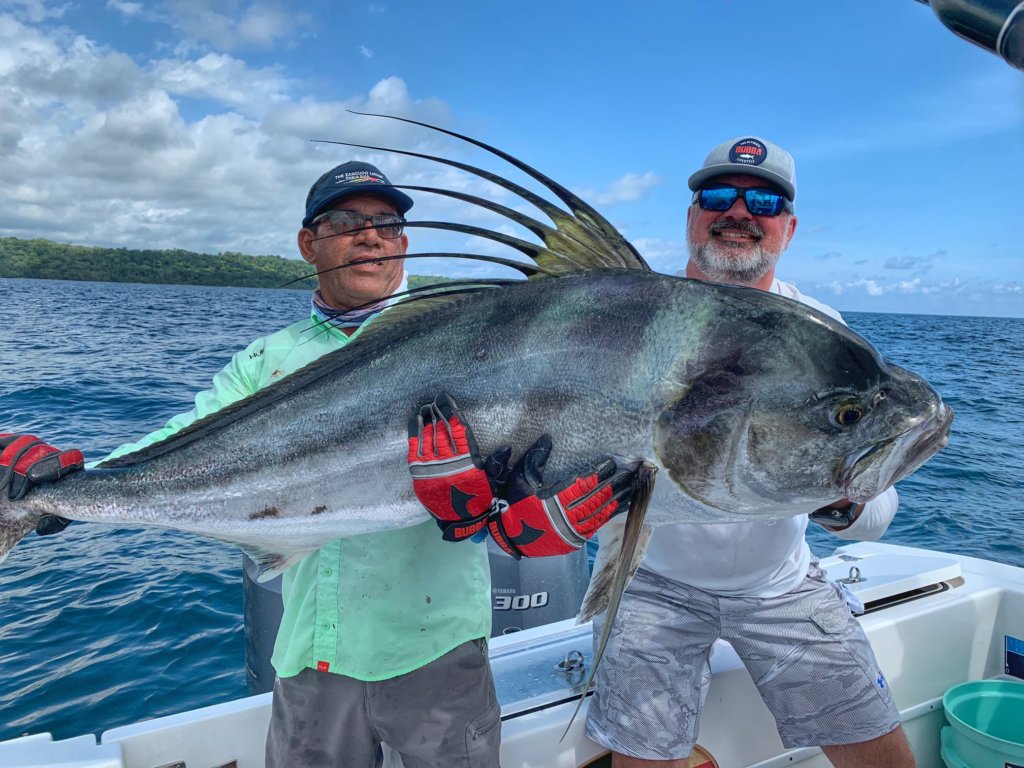
Choose the method around the kind of fishing you want to do. If you enjoy casting and working the lure yourself, ask for time to fish artificials. If you want to learn how a local crew finds and presents bait, request a live bait session. A firsthand account from the area describes collecting blue runners for live bait and switching to small jigs when the fish responded below the surface.
Slow trolling or drifting live bait. The crew can move the boat slowly to take a live bait along a shoreline or let it drift through moving water. Ask the mate to show you what a take looks like on their setup and when to engage the reel. The sequence depends on how they rig the bait.
Casting poppers, stickbaits or jigs. A popper works at the surface, a stickbait gives you a swimming presentation, and a jig lets you work deeper water. If your group wants to cast for most of the day, say so when booking. That gives the crew time to discuss the boat setup, how anglers will rotate and what conditions favor casting.
Want to build your trip around roosterfish? Tell Fish Nation your preferred dates, group size and whether you want to fish live bait, cast lures or try both. Call +1-307-637-5495 or email info@fish-nation.com. Explore the Costa Rica sportfishing trip.
Roosterfish Tackle to Discuss With Your Captain
Start with the method and the water you’ll fish. For casting, the rod has to load comfortably with the intended lure. Around rocks, the captain also needs enough control to keep a hooked fish away from structure. If you bring your own roosterfish tackle, send the crew your rod rating, line strength and lure weights so they can check the setup before you travel.
| Method | Setup to discuss | What to confirm |
|---|---|---|
| Live bait | Saltwater spinning or conventional outfit with a smooth drag and an abrasion-resistant leader | Bait supply, hook style, line class and who rigs the bait |
| Poppers and stickbaits | Spinning outfit matched to the lures you’ll cast repeatedly | The captain’s preferred lure weights, leader strength and supplied artificials |
| Jigging | An outfit matched to the jig weight and depth being fished | Which jigs the crew uses and whether they’re supplied |
If you plan to use the boat’s gear, ask whether bait, lures and terminal tackle are covered by the quote. A quote that includes rods and reels may list those items separately. Before the first pass, ask the crew where to stand and how they want you to move if a fish runs across the stern.
How to Choose a Roosterfish Fishing Trip
The easiest way to compare roosterfish fishing trips is to ask each operator to quote the same plan. For example, if your group of three wants one full inshore day for roosterfish and one offshore day for sailfish, put both days in the request. This gives you comparable quotes and makes your main target clear.
Before paying a deposit, confirm:
- Fishing time and target. Ask how many hours are booked and whether the crew will dedicate the inshore day to roosterfish.
- Boat and group size. Confirm the boat, whether it’s private for your group, and how many anglers can cast or fish at once.
- Inclusions and total price. Ask for the currency, pricing basis, bait and tackle inclusions, and any separate charges.
- Weather alternatives. Ask whether the crew can shift to more sheltered inshore water, change the fishing day or reschedule, and how each option affects the booking.
Frequently Asked Questions
What months should I consider for roosterfish fishing in Costa Rica?
For a trip out of Puerto Jiménez, May through August is a practical starting point for enquiries. Ask the captain to compare your available weeks using recent conditions and the water they expect to fish.
Can I target roosterfish and sailfish on the same trip?
Yes, you can enquire about both on a trip with separate fishing days. Roosterfish are an inshore target on this programme, while sailfish are part of the offshore fishing. Tell the captain which species takes priority if you only have one day.
Should I book a half-day or a full day for roosterfish?
Ask what each option covers from the departure point. If the crew expects to spend time collecting bait or moving between coastal spots, a full day gives them more time to adjust the plan. A half-day may suit your group if the captain expects to fish nearby and can explain how the hours will be used.
Is live bait better than casting lures?
Both are worth discussing. Live bait suits a controlled pass along a shoreline or current seam. Casting gives you an active role, and jigs give the crew an option when fish are holding below the surface. Ask what has been working on the water you’ll fish.
How much does a guided roosterfish trip cost?
Request a current quote based on your dates, group size and number of inshore days. Ask for the total, the quoted currency and an itemized list of separate charges before comparing options.
Plan Your Puerto Jiménez Roosterfish Trip
Start your enquiry with the sentence “Roosterfish are our main target.” Include your preferred dates, the number of anglers and whether you want to cast lures or fish live bait. If you also want an offshore day, include it in the same request so the itinerary and quote cover both.
Ask Fish Nation for current availability and a quote for your group. Call +1-307-637-5495 or email info@fish-nation.com. View the Costa Rica sportfishing trip.