

Search for the best Belize fly fishing and you’ll quickly find the same three names: permit, bonefish and tarpon.
That is useful, but it doesn’t answer the question that actually matters when planning a trip:
Which Belize fishing experience is right for you?
An angler hoping to catch a first bonefish may need a very different trip from someone whose entire vacation is built around permit. A traveler chasing a Belize Grand Slam has different priorities again. And a couple where only one person fishes should evaluate a lodge differently from a group of dedicated anglers.
This distinction matters because Belize is not one uniform fishery. Northern Belize, Turneffe Atoll and southern Belize can all offer the famous three species, but the water, access, fishing emphasis and overall vacation experience differ. Current specialist guides increasingly describe Belize as several distinct fisheries rather than a single destination.
So instead of producing another list of fish species, this guide starts with the traveler.
For Fish Nation’s broader overview of accommodations and available programs, see the Belize Fly Fishing Lodges cornerstone guide.
The 60-Second Belize Trip Matcher
If you’re still deciding what kind of Belize experience to research, start here.
| Your Priority | What to Look For |
|---|---|
| First saltwater fly-fishing trip | Reliable bonefish opportunities and convenient flats access |
| Permit is the main goal | A fishery known specifically for permit rather than a general resort |
| Belize Grand Slam | Water offering realistic access to bonefish, permit and tarpon |
| Tarpon-focused vacation | Resident/migratory tarpon information and appropriate seasonal timing |
| Fishing with a non-angler | Resort amenities and worthwhile non-fishing activities |
| Maximum fishing time | Short transfer from lodge to productive water |
| Comfort-focused vacation | Full-service lodge with meals, transfers and quality accommodations |
| Value-focused trip | Evaluate fishing days and inclusions, not room rate alone |
This is a more useful starting point than asking which Belize lodge is “best.”
The best lodge depends on what you need the trip to accomplish.
Mistake #1: Treating Bonefish, Permit and Tarpon as the Same Trip

Belize’s three headline species may share some of the same waters, but they should not automatically be treated as interchangeable trip goals.
That’s especially important when comparing lodges.
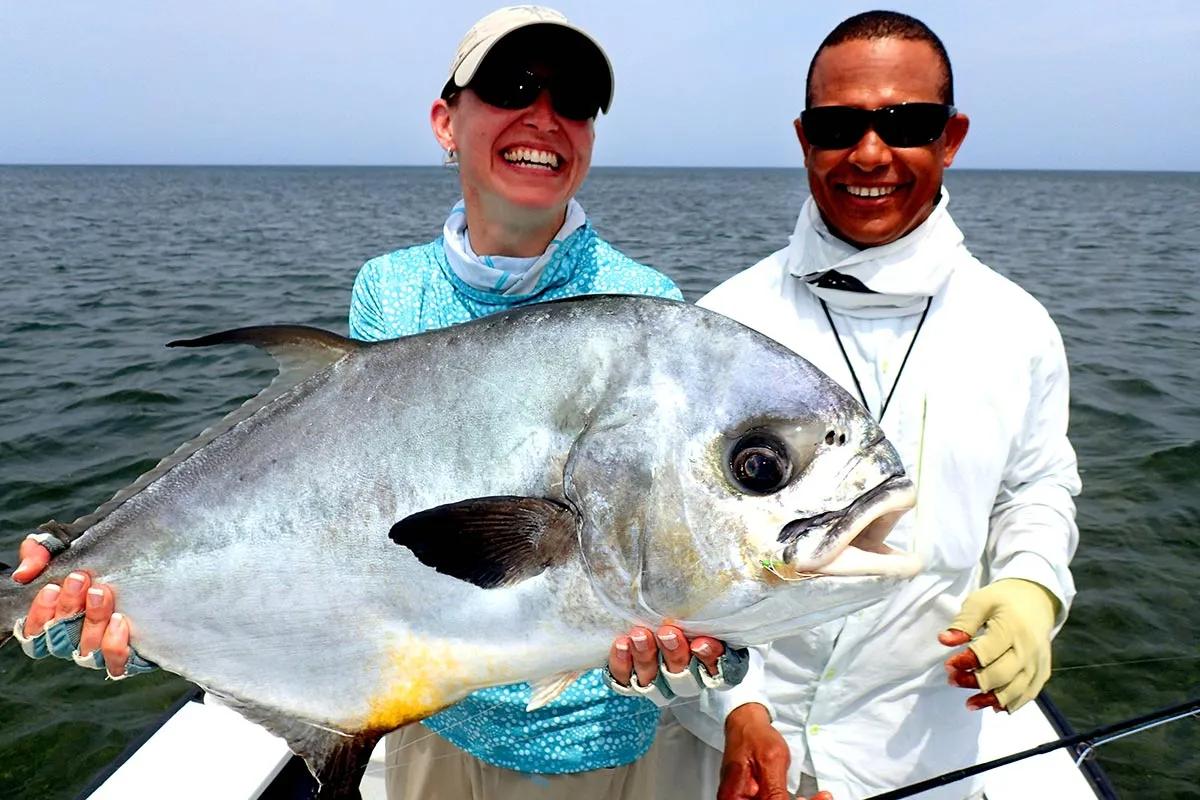
Fish Nation’s current World-Class Fly Fishing Resort Belize #363, for example, reports bonefish commonly around 2–5 pounds, permit from approximately 4–30 pounds, and resident tarpon throughout the year, including fish exceeding 100 pounds. Its bonefish grounds are described as only minutes from the property.
Those numbers tell us what exists in that particular fishery.
They don’t tell us which species you should prioritize.
Here’s a better way to decide.
If This Is Your First Saltwater Fly-Fishing Trip
Start by looking seriously at bonefish opportunities.
This isn’t because bonefish are somehow “easy.” Wild fish and changing conditions make that kind of promise unrealistic.
The advantage is opportunity.
Fish Nation’s Belize cornerstone reports that its #64 program can encounter large schools of bonefish, while #363 reports fishing grounds close to the lodge and opportunities from boats as well as wadeable flats.
For someone learning the rhythm of saltwater sight fishing, the number and accessibility of opportunities can matter enormously.
That leads to an overlooked question when choosing a lodge:
How long does it take to reach the fishing?
A beautiful resort doesn’t necessarily maximize fishing time. Some specialist Belize operations explicitly build their programs around minimizing boat transfers and fishing according to productive conditions rather than simply following a fixed clock.
For a first trip, that practical detail may matter more than another luxury amenity.
If Permit Is the Reason You’re Going to Belize
Then stop shopping for a generic “Belize fishing lodge.”
Shop for the fishery first.
Permit are the species most likely to expose the weakness in a generic destination article because simply knowing that Belize has permit isn’t enough.
Different parts of Belize provide different water, fishing pressure, access and opportunities.
Current regional specialists distinguish Turneffe, Placencia and far southern Belize rather than treating them as equivalent. For example, one current north-to-south guide characterizes Placencia as a strong all-around Grand Slam region, Turneffe as particularly notable for bonefish, and Punta Gorda as an option for anglers prioritizing remote, less-crowded permit water.
The important takeaway isn’t that one of those places is universally superior.
It’s this:
A permit-first trip should be selected differently from a general Belize vacation.
Before choosing, ask:
- Is permit the primary focus or one of several species?
- How much fishing time do you have?
- Is your group comfortable with a specialized fishing experience?
- Do non-anglers need activities?
- Are you choosing the location because of the fishery—or because the resort photographs look good?
Those questions can eliminate unsuitable options quickly.
If Your Goal Is a Belize Grand Slam
This requires a different mindset again.
A Grand Slam means catching and releasing bonefish, permit and tarpon in the same day.
But the phrase can create unrealistic expectations when it’s used as marketing shorthand.
Even Belize lodges specializing in the three species caution that a same-day Grand Slam isn’t something that should be described as routine; conditions, opportunity and angler performance all matter.
So don’t evaluate a Grand Slam trip by asking:
“Does this lodge have all three species?”
Ask:
“Does the fishery provide access to all three species within a realistic fishing day?”
That’s a much stronger question.
It considers geography and access rather than simply checking three species names off a website.
Same-Day Grand Slam vs Trip Grand Slam
There’s also a useful distinction that gets lost in many guides.
A same-day Grand Slam means all three species in one day.
A trip Grand Slam means catching all three over the course of the stay.
The latter can be a more realistic way to think about a multi-day Belize vacation rather than allowing one achievement to define whether the entire trip was successful.
If Tarpon Is Your Priority
Look beyond the phrase “tarpon fishing available.”
The better question is whether the fishery has resident tarpon, migratory tarpon, or both.
Fish Nation’s #363 program reports resident tarpon throughout the year, with larger migratory fish adding another seasonal dimension later in summer.
That immediately changes the planning conversation.
A traveler who simply wants tarpon opportunities isn’t necessarily choosing dates using the same criteria as someone specifically interested in a migratory period.
This is exactly why Fish Nation’s separate Belize season article should handle the “when should I go?” question.
This page remains focused on “what type of Belize trip should I choose?”
Keeping those intents separate also prevents two Fish Nation pages from becoming near-duplicates.
If You’re Traveling With Someone Who Doesn’t Fish
This may be one of the most underestimated Belize trip-planning questions.
Imagine two seven-night vacations with equally good fishing.
At the first property, the non-angler has little to do while the angler is away.
At the second, the wider experience includes snorkeling, diving, kayaking, cultural excursions and comfortable resort facilities.
For a dedicated solo angler, that difference might be irrelevant.
For a couple or family, it could determine which trip works.
Fish Nation’s #363 program is particularly interesting from this perspective. Its property offers oceanfront lodge rooms and larger villas, while Fish Nation also lists activities including snorkeling, scuba diving, kayaking, cycling, cave tubing, zip lining, wildlife experiences and Maya archaeological excursions.
How good is the fishing?
Ask:
How good is the vacation when someone isn’t fishing?
That single question can produce a completely different shortlist.
The Hidden Variable: Fishing Time vs Transfer Time
Two packages can advertise the same number of “fishing days” without delivering the same daily experience.
Why?
Location.
If productive flats are close to the lodge, less of the day may be consumed reaching them. If the target area requires a substantial run, travel becomes part of the fishing day.
Some Belize operators make this a central selling point. Blue Horizon, for example, says its proximity to permit flats allows its program to organize fishing around tide cycles rather than meal schedules or arbitrary clock times. Playa Blanca similarly emphasizes direct dock access to nearby fishing areas.
This gives travelers another useful comparison metric:
Don’t compare only:
7 nights vs 7 nights
or
6 fishing days vs 6 fishing days
Also investigate:
How efficiently does the location provide access to the fishery I’m actually traveling for?
That’s particularly relevant when permit or a Grand Slam is the main goal.
Don’t Let the Grand Slam Hide the Rest of Belize
Bonefish, permit and tarpon dominate Belize fly-fishing searches, and understandably so.
But they aren’t the entire ecosystem.
Fish Nation notes additional species depending on destination and conditions, while other Belize fisheries report species such as barracuda, jacks and snook alongside the headline flats species.
This matters because fishing rarely follows a perfect checklist.
A day that doesn’t produce one particular target species can still provide a memorable fishing experience.
That’s another reason to evaluate a trip by the quality and diversity of the overall fishery, rather than treating a Grand Slam as the only measure of success.
A Belize Fishing Package Should Be Read Like a Contract, Not an Advertisement
The headline price tells you very little by itself.
Consider two hypothetical packages:
Package A: Lower price, but fishing, transfers and several fees are separate.
Package B: Higher headline price, but includes more fishing days, meals and transportation.
Package A isn’t automatically the better value.
Fish Nation’s Belize programs demonstrate why the details matter. Its current lodge information separates accommodation, guided fishing, transfers, meals and other inclusions, while also identifying expenses that may sit outside the advertised package.
Before evaluating price, identify:
Fishing days: How many are actually included?
Boat arrangement: Private or shared?
Accommodation: What room category and occupancy assumption does the price use?
Meals: Which meals and beverages are included?
Transfers: Does the package begin at Belize City or only after reaching the lodge?
Fishing-related fees: Which licenses or applicable fees are separate?
Taxes: Included or added later?
Non-fishing activities: Included, discounted or separately priced?
This produces a much more meaningful cost comparison.
Fish Nation’s Current Belize Pricing: What the Number Actually Means
Fish Nation’s current Belize cornerstone lists a 2026 #64 promotional package starting at $2,556 per person for three nights and two fishing days, based on double occupancy and a shared boat, excluding taxes and subject to the promotion’s stated conditions.
That number should not be turned into:
“Belize fly fishing costs $2,556.”
It doesn’t.
It tells us what one specific Fish Nation package costs under specific conditions.
That’s an important difference.
A useful fishing travel article should preserve that context rather than taking the lowest visible number and presenting it as a destination-wide average.
Prices and promotions can change, so current rates and inclusions should always be reconfirmed before travel arrangements are made.
What Belize’s Catch-and-Release Rule Tells Us About the Fishery
Here’s a piece of Belize planning information that belongs much higher in the conversation.
Bonefish, permit and tarpon are protected catch-and-release species in Belize.
Belize Fisheries Department regulations state that taking, buying or selling these species is prohibited and that possession is not allowed.
This isn’t simply a footnote for the FAQ section.
It’s part of the identity of Belize’s flats fishery.
These three species aren’t treated merely as something to catch once. Their protection helps preserve the recreational fishery that draws anglers to Belize in the first place.
For travelers, the practical point is straightforward:
A Belize Grand Slam is a catch-and-release achievement.
So, Which Belize Fly Fishing Experience Should You Choose?
Instead of naming one lodge as the winner, use this decision tree.
Choose a bonefish-oriented experience when:
You value frequent flats opportunities and want bonefish to form a major part of the trip.
Choose a permit-focused fishery when:
Permit is the reason you’re traveling, and you’re comfortable letting that objective influence region, lodge and schedule.
Choose a Grand Slam-oriented program when:
You want access to bonefish + permit + tarpon and value variety more than specializing in one species.
Choose a tarpon-oriented trip when:
Tarpon are the main attraction and you’re willing to select the destination and dates around the type of tarpon opportunity you want.
Choose a full-service resort when:
Fishing matters, but accommodation, dining and non-fishing activities also need to satisfy the rest of the group.
Choose by fishery, not amenities, when:
Everyone traveling is primarily there to fish.
That’s a much more defensible definition of “best Belize fly fishing” than simply ranking ten lodges from first to tenth.
Seven Questions to Answer Before You Book
Before narrowing your Fish Nation options, write down your answers to these:
1. Which fish would make the trip successful for me?
2. Is a Grand Slam genuinely my goal, or do I simply want good multi-species fishing?
3. How experienced is everyone in the fishing group?
4. How many full fishing days do I want?
5. How important is quick access from the lodge to productive water?
6. Is anyone traveling who won’t be fishing every day?
7. What does the quoted price actually include?
If two Belize programs still look identical after answering those questions, then compare accommodations and price.
Not before.
Frequently Asked Questions
What is the best Belize fly fishing trip?
There is no single best trip for every angler. A first-time saltwater angler, dedicated permit angler, Grand Slam traveler and couple with a non-fishing partner may each be better served by a different program.
Is Belize better for permit, bonefish or tarpon?
Belize provides opportunities for all three, but different regions emphasize different fishing experiences. That’s why choosing the fishery around your primary species is more useful than treating Belize as one uniform destination.
What is a Belize Grand Slam?
A Grand Slam means catching and releasing bonefish, permit and tarpon in the same day. Catching all three during a multi-day stay is commonly described as a trip Grand Slam.
Are bonefish, permit and tarpon catch-and-release in Belize?
Yes. Belize Fisheries Department identifies bonefish, permit and tarpon as protected catch-and-release species, and possession is prohibited.
Is Belize suitable when my partner doesn’t fish?
It can be, but lodge selection becomes particularly important. Some Fish Nation programs combine fishing with resort amenities and activities such as snorkeling, diving, kayaking and excursions, making them more suitable for mixed-interest trips.
How much does a Belize fly fishing trip cost?
There isn’t one useful destination-wide price. As a current Fish Nation example, its Belize cornerstone lists a 2026 #64 promotion from $2,556 per person for three nights and two fishing days, under specific occupancy, boat and tax conditions.
When is the best time to fly fish Belize?
It depends on the species, region and type of opportunity you’re prioritizing. Rather than duplicating this article, Fish Nation’s separate seasonal guide will examine that question month by month.
The Best Belize Trip Starts With the Right Question
Finding the best Belize fly fishing isn’t really about finding the resort with the biggest room, the longest species list or the lowest advertised rate.
It’s about matching the fishery to the traveler.
A first-time saltwater angler may value accessible bonefish opportunities.
A permit angler may happily sacrifice resort variety for a fishery that better matches that single goal.
A Grand Slam traveler needs access to all three headline species.
And someone traveling with a partner or family may need an excellent vacation both on and off the water.
Once you know which traveler you are, Belize becomes much easier to evaluate.
For help identifying the Fish Nation Belize program that best matches your trip priorities:
Phone: 307-401-6400
Email: info@fish-nation.com
Explore Fish Nation’s Belize Fly Fishing Lodges page for current programs, accommodations and trip information.