

Rainbow trout fishing attracts everyone from first-time anglers learning the basics to experienced fly fishermen traveling across the world in search of trophy-class wild rainbows.
Rainbow trout (Oncorhynchus mykiss) are prized for their strength, striking appearance, and adaptability to rivers, streams, lakes, and other cold-water environments. But consistently catching them requires more than simply finding water that holds trout. Season, water conditions, available food, fishing technique, and location all influence success.
For anglers interested in taking the experience beyond their local waters, Fish Nation also provides access to exceptional rainbow trout fishing destinations, including trophy fisheries in Alaska and Patagonia.
How to Catch Rainbow Trout

The best way to catch rainbow trout depends heavily on where you’re fishing.
A technique that produces fish in a stocked pond may be completely different from the approach needed for a wild Alaskan river or a trophy trout fishery in Patagonia.
Three common approaches include fly fishing, lure fishing, and bait fishing where local regulations permit it.
Fly anglers can use dry flies, nymphs, streamers, and other patterns based on the insects and food sources present in the water. Conventional anglers can use artificial lures such as spinners and spoons.
The important part is adapting.
Water temperature, depth, current, weather, season, and available food can all influence where rainbow trout hold and what they are willing to take.
Rainbow Trout Fishing Setup
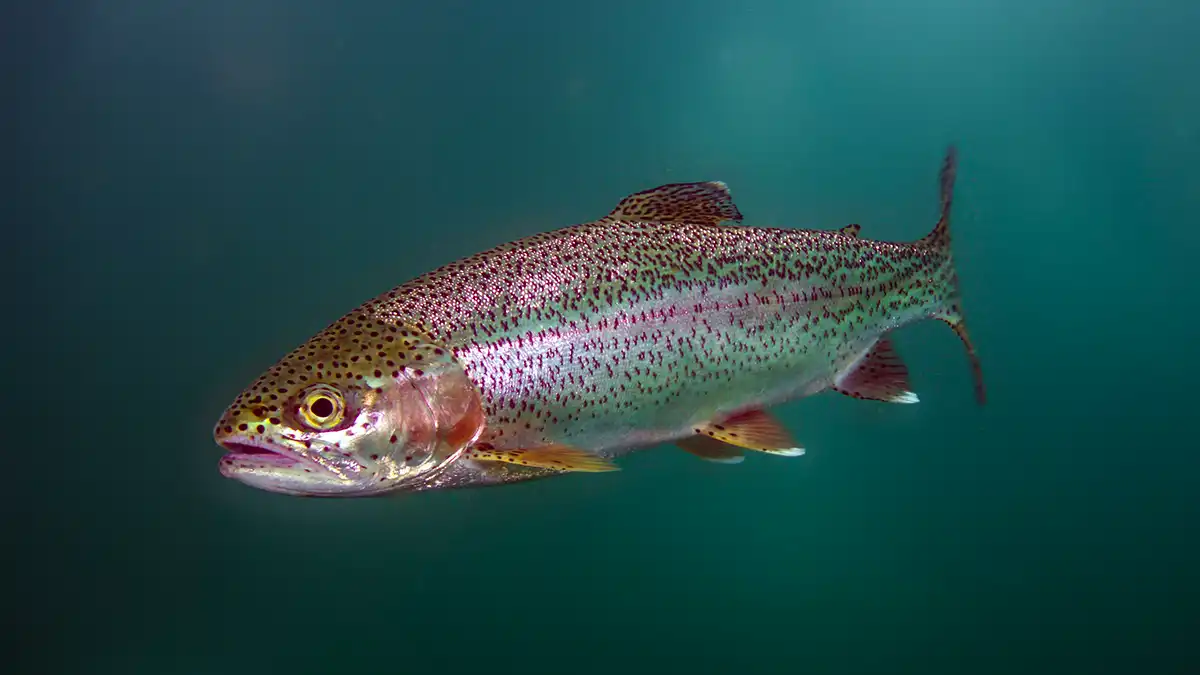
A good rainbow trout fishing setup should match the water you’re fishing and the size of fish you expect to encounter.
Light tackle may be perfectly suitable for smaller streams and many stocked fisheries. Larger rivers and trophy destinations can require completely different equipment.
Fly anglers should consider factors such as:
- Fish size
- River or lake conditions
- Casting distance
- Wind
- Fly selection
- Current speed
- Fishing depth
This becomes particularly important when traveling specifically for trophy rainbow trout. The equipment needed for an ordinary local trout fishery may not be appropriate for targeting exceptionally large wild rainbows in Alaska or Patagonia.
When booking a destination trip, follow the current equipment recommendations for that specific fishery.
Best Bait for Rainbow Trout

There isn’t one bait that works everywhere.
The best bait for rainbow trout depends on their natural food sources, the season, water conditions, and local regulations.
Where bait fishing is permitted, successful presentations often reflect food already available to trout.
This can become especially important in salmon-rich environments such as Alaska, where seasonal salmon activity can dramatically influence rainbow trout feeding behavior.
Before using bait, always check the regulations for the exact water you’re fishing. Some wild trout fisheries have restrictions intended to protect their rainbow trout populations.
Best Rainbow Trout Fishing Lures
Artificial lures provide another effective way to target rainbow trout.
Spinners and spoons are popular choices because anglers can cover water and experiment with different depths and retrieve speeds.
The bigger lesson is not to become dependent on one lure.
If trout aren’t responding, consider changing:
- Depth
- Retrieve speed
- Lure size
- Presentation
- Fishing location
Understanding where fish are holding can be more important than continually changing tackle.
Fly Fishing for Rainbow Trout
Fly fishing rainbow trout allows anglers to imitate a wide variety of natural food sources.
Dry flies can imitate insects at the surface, while nymphs allow anglers to target fish feeding below it. Streamers provide another option for searching larger stretches of water and targeting aggressive trout.
Season also matters.
This becomes particularly interesting in Alaska, where salmon runs can create major seasonal feeding opportunities for wild rainbow trout.
For anglers interested in combining trout with a broader Alaskan fishing experience, Fish Nation’s Alaska DIY Fishing guide provides additional information about planning an independent Alaska fishing trip. Fish Nation notes that Alaska’s rivers and streams can provide opportunities for rainbow trout alongside Dolly Varden, grayling, and Pacific salmon.
Where to Fish for Rainbow Trout
There are countless rainbow trout fishing spots across North America and other parts of the world, but not every trout fishery provides the same experience.
For traveling anglers, two destinations stand apart within Fish Nation’s current offerings:
Alaska: wild rainbow trout fishing associated with productive salmon ecosystems and remote wilderness.
Patagonia: destination fly fishing centered around exceptional wild rainbow trout, including the legendary Jurassic Lake region.
Choosing between them depends on whether you want a broader Alaska fishing experience or a trip heavily centered around trophy trout.
Alaska Rainbow Trout Fishing
Alaska deserves special attention when discussing destination rainbow trout fishing.
Fish Nation’s Ultimate Alaska Fly-Out Salmon & Trophy Rainbow Trout Lodge #46 provides access to the Kvichak River and other productive waters of Southwest Alaska.
The program isn’t simply a generic Alaska fishing package.
Guests can access up to 30 rivers and streams, while the Kvichak River itself offers opportunities for trophy rainbow trout exceeding 30 inches. Other target species can include salmon, Arctic char, and grayling.
The seasonal pattern is particularly useful when planning a rainbow trout-focused trip.
Fish Nation currently identifies:
June: Large spring rainbow trout opportunities as the season opens.
July: Peak species variety and generally favorable summer conditions.
Late August: Trophy rainbow trout fishing begins strengthening.
September: Excellent trophy rainbow trout opportunities during the fall period.
This means the best dates should be selected according to your actual fishing priorities rather than simply choosing an arbitrary summer week.
Another Alaska Rainbow Trout Option
Anglers wanting a more flexible Alaska experience can also explore Fish Nation’s Prince of Wales Island DIY or Charter Fishing Adventure #17.
Prince of Wales Island contains numerous streams and lakes supporting rainbow trout along with Dolly Varden, cutthroat trout, steelhead, and salmon.
Fish Nation currently lists rainbow trout from approximately 12–30 inches, with June through September identified as the main fishing period on this program. Guided freshwater river fishing is also available.
This gives anglers another type of Alaska rainbow trout experience rather than treating every Alaska trip as the same product.
Trophy Rainbow Trout Fishing in Patagonia
Patagonia offers an entirely different experience.
One of its most famous trophy rainbow trout fisheries is Lago Strobel, better known among anglers as Jurassic Lake.
Fish Nation’s current Patagonia material features Jurassic Lake South and North programs built around trophy wild rainbow trout fishing.
The South program provides access to Jurassic Lake, the Barrancoso River, and additional secluded trout waters. The lodge hosts only 12 anglers per week, helping keep fishing pressure controlled.
The program also offers access to the final six miles of the Barrancoso River, the only tributary entering Strobel Lake.
This is destination trout fishing rather than an ordinary day on a local lake.
Current Jurassic Lake South Rates
Fish Nation currently publishes the following rates for its Jurassic Lake South program:
3 Nights / 2.5 Fishing Days — $5,750
5 Nights / 4.5 Fishing Days — $6,580
7 Nights / 6.5 Fishing Days — $7,950
Published dates include selected January, February, and March departures.
These are rates for this specific Fish Nation program and should not be interpreted as the general cost of rainbow trout fishing in Patagonia.
Jurassic Lake North
Fish Nation also features a Jurassic Lake North program.
This operation is located on a private Patagonian ranch and provides access to Jurassic Lake, the Barrancoso River, spring creeks, lakes, and other secluded fisheries.
One of its strengths is variety. Instead of repeatedly fishing the same water, anglers can rotate through different types of trout habitat during their stay.
Current published rates are:
5 Nights / 4 Fishing Days — $4,950
7 Nights / 6 Fishing Days — $5,950
Because availability, dates, and pricing can change, anglers should confirm the current details directly with Fish Nation before making travel arrangements.
Alaska vs. Patagonia Rainbow Trout Fishing
Neither destination is automatically better.
They offer different experiences.
Choose Alaska if you want: remote North American wilderness, trophy wild rainbows, productive salmon ecosystems, and the possibility of targeting multiple species during the overall adventure.
Consider Patagonia if you want: a destination strongly centered around trophy trout, extensive fly fishing opportunities, remote Patagonian landscapes, and access to famous waters such as Jurassic Lake and the Barrancoso River.
The correct choice ultimately depends on your fishing goals, preferred dates, budget, travel expectations, and preferred fishing style.
What Is the Best Time for Rainbow Trout Fishing?
There isn’t one universal rainbow trout fishing season.
The best time depends on location, water temperature, food availability, spawning activity, and local regulations.
Even within one destination, conditions can change dramatically throughout the season.
Fish Nation’s Alaska #46 program demonstrates this clearly. June can provide large spring rainbow opportunities, while late August and September shift toward trophy rainbow trout fishing.